Building Reliable Digital Workflows
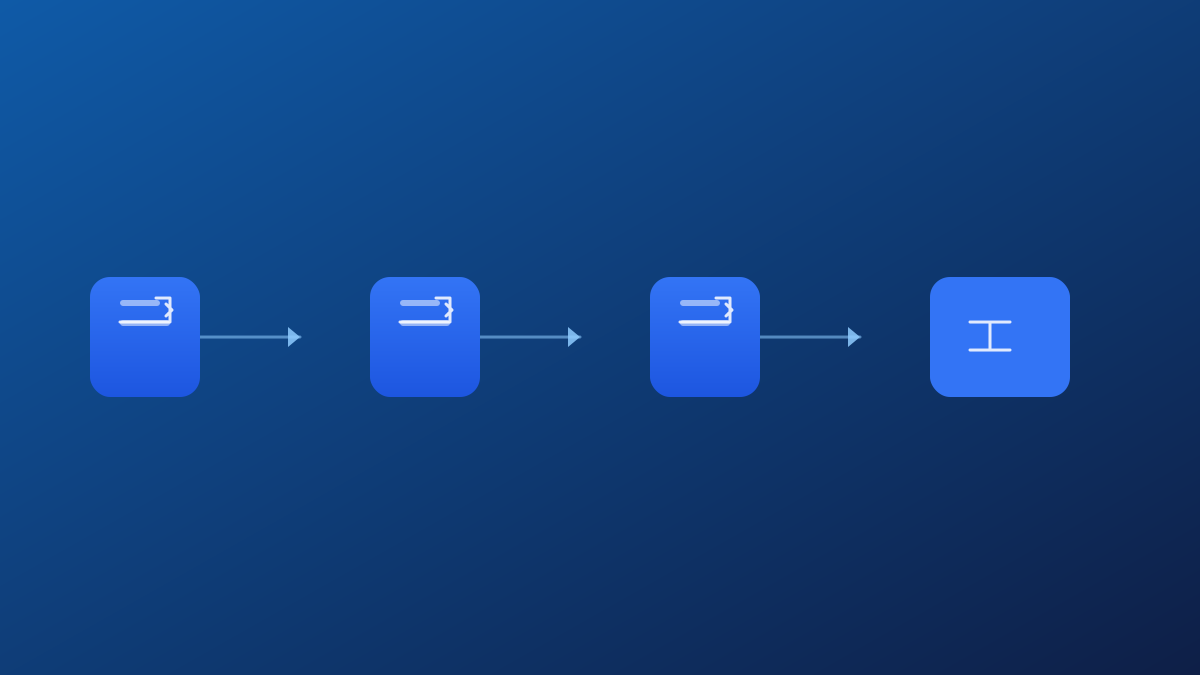
Much of day-to-day business work is repetitive: approvals, handoffs, data entry, and updates that follow a predictable path. When these steps are informal or inconsistent, work slows down and errors creep in. This article explains how to build digital workflows that are reliable and easy to maintain.
What a digital workflow is
A digital workflow is a structured, repeatable sequence of steps that moves a piece of work from start to finish. A good workflow makes explicit three things: what happens, who is responsible at each step, and what the input and output of each step should be.
The goal is not to automate everything at once. The goal is to make the process visible and consistent, so that it can be understood, repeated, and improved.
Why reliability matters
- Fewer errors: consistent steps reduce the chance that a step is forgotten or done differently each time.
- Repeatability: the same input produces the same outcome, which builds confidence.
- Traceability: a clear record of who did what and when makes problems easier to investigate.
- Continuous improvement: once a process is visible, bottlenecks and delays become measurable.
Core design principles
- Clear ownership: every step should have an owner, and every handoff should be explicit.
- Defined inputs and outputs: state what each step receives and what it must produce.
- Visible status: at any point, it should be clear where the work is and what happens next.
- Error handling: define what happens when a step fails, so work does not silently stop.
- Documentation: keep the process simple enough to describe in a few sentences.
Steps to build one
- Map the current process: document how the work actually flows today, not how it should ideally flow.
- Identify bottlenecks: find the steps where work waits, gets reworked, or needs manual chasing.
- Define steps and roles: write down each step, its owner, and its expected input and output.
- Automate repetitive parts: only automate steps that are already consistent; do not automate chaos.
- Monitor and iterate: use simple metrics such as cycle time to find the next improvement.
Conclusion
Reliable digital workflows are built on clarity before automation. When a process is well-defined and visible, teams spend less time on coordination and more time on the work itself. Start with one process, make it reliable, and then expand.